Blog Archive

Showing posts with label Supernatural Horror. Show all posts

Sunday, 6 September 2015

How Horror Movies use Symbolism to Reflect the Social and Moral World


Pan’s Labyrinth


This allegorical fantasy horror film is set in Spain in 1944, at which point the Civil War had come to an end. It was directed by Guillermo Del Torro, and it uses narrative and genre theory in a clever and intricate way, allowing it to be interpreted psychologically, politically, and sociologically.

The Esoteric Interpretation


The word “esoteric” is defined as an adjective which describes something to be “intended for or likely to be understood by only a small number of people with a specialised knowledge or interest.” In the case of Pan’s Labyrinth, this group of people would include those informed about occult mysteries, as these are referenced repeatedly. Occult mysteries are repeatedly referenced during the movie through various uses of symbolism.

Sight


Firstly, the use of eye/sight symbolism is used from the very beginning of the movie, particularly in the scene where the main character, Ofelia, discovers the eye of a faun statue. The eye is used repeatedly in occult mysteries to symbolise the ‘Sight’ which allows a person to see things both real and unreal, true and false. With this, Ofelia can see the creatures she could not before, and this is used to create juxtaposition to the villain, Captain Vidal, who is a fascist and does not believe in anything he cannot physically see.

This use of the eye refers to an ancient Egyptian myth of Thoth restoring Horus’ eye. This myth stated that Thoth was the god of the moon, and Horus was set to become the ruler of Egypt after the death of Osiris, who then became the God of the Underworld. Horus loses an eye, but it is restored to him by Thoth – effectively giving him an ‘inner eye’.

This conforms to conventions of the supernatural/fantasy genre as the idea of children being able to see ghosts is a common stereotype, used based on the presumption that children represent innocence, and so can more easily embrace that which adults can not

The Evil Step Father/ Dictator


Following this, Ofelia then meets her step father, Captain Vidal, who is used as a plot device to represent Fascist Spain. As with other films directed by Del Torro, this character is obsessed with the death of his father, hence conforming to conventions of reflecting how fascism is patriarchal.

However, this character also uses the “Cronus Complex” with Cronus being a mythological Greek representation of death, harvesting and time. Vidal represents the Cronus Complex by illustrating how, due to the oppressive nature of the materialistic world, people are forced to conform it’s conventions without question or thought, hence preventing them from being able to reach full self-actualisation in life.

The idea of this character representing Cronus is further anchored through the use of iconography, particularly as the character appears to have an obsession with time, constantly referring to and maintaining his watch. This is used to show the audience that time is acts as a major limitation in the material world.


The Labyrinth


In many ancient cults, mazes and labyrinths were used as places of initiation. This is because they symbolise man’s search for the truth, often including ideas of the lower world through which man has to travel.

Religion


Religion is a narrative theme that is conventionally used in horror movies, and in the ending of Pan’s Labyrinth there is a distinctive religious reference in the fact that Ofelia’s reward for passing the final test is her access to a throne alongside her mother and father. This scene has connotations which clearly link to the story told by the Bible of Jesus trying to return to God.

The consistent reference to fantasy and the mythological illustrates to the audience how Ofelia uses an imaginary world to escape from the dehumanising and repressive reality. This is a psychological phenomenon known to happen often with children in the world, showing how fantasy is generally used as a coping mechanism.

This film uses the theory of binary opposition most prominently, using various themes such as good vs evil, and fiction vs real life.

Evaluation

We could use this symbolism in our own coursework, adapting themes of religion and Propp's Spheres of Action in order to convey attitudes and beliefs held in today's society. This would allow us to exploit contemporary fears in today's society in an entertaining way, which will enable us to engage our audience.
However, if we do use these themes, we will have to adapt them to conform to the conventions of our chosen genre.

The History of the Supernatural Horror Genre


History of Supernatural (Ghost) Horror Films

1950s

1959

House on Haunted Hill

This horror movie is about an eccentric millionaire who invites five people into his haunted mansion with the promise of a cash prize if they survive the night.

During the late fifties/early sixties there was an introduction of TV game shows, and this movie emulates this theme, adapting it for a horrific purpose.
During this time, technical innovations were used in the cinema, and with this particular film, William Castle, who was an ex-music hall producer, rigged a device known as the ‘Emergo’ which was a glowing skeleton that, at a certain point during the film, flew over the heads of the audience.

 1960s

A range of ghost stories were produced in the 1960s, and often used a sceptic approach to reflect how, within society, the teens of the 1950s were growing up and so wanted to watch horror films that were more believable.

Also, the ghost story plot line was used to counter the previous ‘creature feature’ genre from the 1950s which was inspired by the end of the war. The use of ‘ghosts’ was instead used in the 1960s to tone down the intensity and eccentricity of the previous films and to reintroduce basic mise-en-scene.

Furthermore, in these films it is often a woman who is seeing the ghosts and, stereotypically, it is a male who tries to calm her by undermining her authority, which conforms to conventions of women being depicted as inferior to men. However, towards the end the woman is proven right, and this reflects the changing roles of women during and after the second world war, and could be seen as a cautionary tale for women.

One such example of this is:

1962

Carnival of Souls

In this supernatural horror the ghouls bare a remarkable resemblance of what was to later become the conventional depiction of ‘zombies’. In particular, this film exploits the use of human relationships/human connection. This film lacks in dialogue, and so largely relies upon non-diegetic music, using few special effects and yet still creating a palpable atmosphere.

This film reflects society at the time as it was after the war, and so many people had lost loved ones. Therefore, this film then uses this to exploit themes of grief and so post traumatic stress disorder in order to relate to audiences.

1970s

During the 1970s, the majority of horror films focused on a theme of demonic children, which was due to the us of thalidomide in the 1960s, which led to many deformed new born babies. Also, the contraceptive pill had just been introduced, and so children became the main focus of horror film, and there was a theme of mistrust in the family unit.

1974

The Exorcist

This movie influenced many more which would come after it. It revolved around ‘social evils’, particularly the inter-generational conflict of the time. “College campuses across the country had erupted in protests against the war in Vietnam, culminating in the shooting of protesters at Kent State University, Ohio, in May 1970.” Therefore, the Exorcist used this idea to conceptualise the growing fear of the youth in America, and clearly reflects contemporary fears over the breakdown of the family unit.


1976

The Omen


This film is about a young boy who can use supernatural powers to render adults helpless. It is often compared to The Exorcist as it follows a very similar theme.

It conforms to many stereotypical conventions of the supernatural horror genre.


1980s

During this decade, there were not as many supernatural 'ghost' horror movies as there were films about werewolves and aliens, but the few that were used, such as in The Shining (1980), were fairly traditional.

1980

The Shining


This film is based on the best selling novel written by Stephen King about a haunted hotel. During the 1980s the children who had grown up with TVs created a generation of creatives who were very interested in the horror genre, and Stephen King was one of such people.

The Shining is much like other horror movies, using 3600 vision. It also played on the traditional use of a ‘haunted house’ theme.

 1981

The Evil Dead


This movie was described as a cult classic. This was the first supernatural horror which introduced the common cliché of having five typical teenagers go into the woods to stay in a ‘cabin’. This uses stereotypes such as the ‘dumb blond’, ‘the jock’, ‘the geek’, ‘the stoner’ and the ‘virgin’. These stereotypes were used to distinguish the separation in society.

This film uses a variety of traditional aspects, such as an isolated location. However, the film began to subvert conventions through the use of POV shots, which became increasingly common, such as in movies like ‘Paranormal Activity’ in order to more directly involve the audience.

1990s

1999

The Blair Witch Project


This film used an innovative online marketing campaign which was completely new to the horror genre. The internet was still very young at the time, and so it was a new and exciting way to promote a film, which created hype. The film used the concept of making it appear as ‘non-fiction’, which is a technique often adopted by horror movies and TV dramas today.


2000s


2002

The Ring


This movie follows the theme of ‘a group of teenagers’ but was the first to introduce the concept of ‘possessed objects’. This decade marked the beginning of the use of mass digitalisation in the marketing and promotion of the film, which created hype.


2009

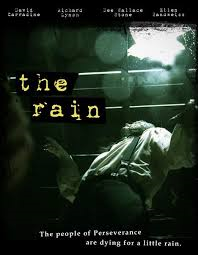
The Rain


Each segment of this film plays homage to the set time period, such as Gothic horror for the 19th Century portion, and the others having monster movie and stalker/slasher themes respectively.


2010s

2009-2014

Paranormal Activity 1-5


These film followed the favoured theme of the ‘haunted house’ and used POV shots such as those used in the Blair Witch Project to create a sense of involvement. It also created the illusion of a ‘home video’ to make it seem more realistic, which reflected how society was becoming more corrupt and people could trust each other less and less.


Evaluation
This blog post is helpful to us as a media coursework group as we may choose to use Supernatural Horror as the genre of our teaser trailer, and so by looking at the moral panics that have influenced films in this genre in the past, we can gain inspiration for our own piece.